Wednesday, February 23, 2011

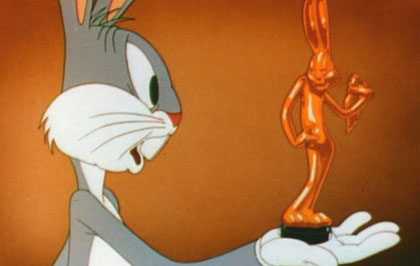
Random Oscar Predictions

In 1970, critic John Simon wrote, “If the Oscars, the annual awards of the Motion Picture Academy, were taken simply as an excuse for Bob Hope to crack his occasionally funny jokes, and for the denizens of Hollywood to show off their expensively tacky gowns and toupees, there might be nothing seriously objectionable about the event. The unfortunate thing is that in some, admittedly shrinking, circles, these awards are still believed to have something to do with artistic merit. Despite the disappointment and disgust many of them have been eliciting — when not resulting in mere raucous laughter — the notion persists that there is a connection between the Oscars and achievement, though perhaps invisible to the naked eye.”

And this was in 1970, when movies of quality were still being made, and the Academy Award nominees were pretty solid things like Five Easy Pieces and M*A*S*H (though to be fair, junk like Airport and Love Story was also nominated). Regarding awards shows, comedian George Carlin wrote in his posthumously published memoir, “Most awards shows are just an excuse for a television show. Showbiz congratulating you but also congratulating itself for being so relevant and important and having the good judgment to pick the best.”

The distinction between artistic merit and commercial spectacle was long ago dissolved, and so everyone must get in on the fun of rooting for their favorite movies (only in Oscar-speak are they called “motion pictures”), directors, actors and actresses to win Oscar statuettes. In today’s media world, you must also concern yourself, evidently, with what every actress is wearing on the “red carpet,” because, god knows, there are few more pressing and important matters in today’s world. Oh no she didn’t wear that dress! What’s with that hair? There are times when a fixation on trivia seems almost criminal.

If you don’t care about the Oscars’ effrontery to art, or just relish, as I do, a good betting opportunity, then picking the Oscar winners can be enjoyable. With those querulous caveats, here are some desultory thoughts and predictions on some of the categories this year.

Best Picture

Wow, ten nominees! Who knew there were that many “great” pictures in 2010? I did not see Inception (sci-fi, ugh) or Toy Story 3 (animation, don’t care) and Danny Boyle's 127 Hours (also known as “A Farewell To Arm” because of the onscreen amputation). About my reluctance to see the latter, I quote Stuart Klawans in The Nation: "127 Hours is a stunt movie, just like Jackass 3D. Both take stunts as their subject matter and were made as stunts in themselves. An evocative word, that. Nobody is sure of its etymology, but people speculate that it comes from the German Stunde, meaning an hour or a lesson. If I had to choose between stunts, I'd say I learned more from my time with the jackasses."

The fight really is between the favorite (or shall we say favourite), The King’s Speech, which has Oscar winner written all over it (British, middlebrow, royalist, congratulates its audience on its good taste, Colin Firth, whom everyone likes), and The Social Network, a slick television-style movie that got many people very excited for reasons that elude me entirely. There are many things one could say about Facebook and its founder, Mark Zuckerberg – look at how social media is changing the world! Perhaps the least interesting thing about Facebook is the story of how Zuckerberg may or may not have stolen the idea from a pair of patrician, crew-rowing twins at Harvard (both of which – twins and Harvard – were faked by David Fincher’s annoyingly “clever” special effects). The risible Golden Globes gave the award to The Social Network, because its target audience is younger than the comparatively senescent Academy Awards.

My money, if I had any, would be on the staid, respectable, “classy” The King’s Speech for the gold. And that would at least be a triumph for low-budget films, having cost a modest $15 million to make and earning over $201 million.

Actor in a Leading Role

Not much suspense here; this will go to Colin Firth for his portrayal of the reluctant, stammering King George VI. It was a fine performance, though the drama going on in the background – the constitutional crisis that led to Edward VIII’s abdication – seemed a lot more interesting than the king’s speech lessons.

All of the nominees seem to have done creditable work, though does anyone think Jeff Bridges would win a second year in a row, or that Jesse Eisenberg was all that outstanding in the aforementioned Mark Zuckerbeg’s School Days”? Javier Bardem was affecting in Alejandro González Iñárritu’s extremely long Biutiful, and as I said, sorry, folks, I could not force myself, without compensation, to watch James Franco cut off his arm in 127 Hours. Sue me.

Actress in a Leading Role

To paraphrase another John Simon observation, whenever a pretty actress shows emotion onscreen, she is said to be engaging in “great acting.”

That is the case with Natalie Portman, a serviceable young actress who whispers and trembles her way through Darren Aronofsky’s horror show Black Swan, which is set in screenwriter Mark Heyman’s puerile idea of the world of professional ballet. (It is no more about the ballet than The Texas Chainsaw Massacre is about the meat industry.) Adding to the hype is the fact that Portman participates with another “hot” actress, Mila Kunis, in some fairly vivid lesbian-vampire-horror sex in this movie. The same is true, to a lesser extent, of Michelle Williams in the overpraised, overwrought low-budgeter Blue Valentine, which features a lot of over-the-top emoting and some fairly frank sex scenes.

Of the nominated performances, I liked Nicole Kidman’s quietly sensitive bereaved mother in the well made but largely ignored Rabbit Hole. She has virtually no chance of winning. Jennifer Lawrence, the young woman in backwoods meth country in Winter’s Bone is an interesting nominee, as is the appealing Annette Bening in the likeable lesbian-themed comedy The Kids Are All Right – who may be due for Oscar recognition -- but the energy, or what has annoyingly come to be called “buzz,” is all around Portman (unfortunately).

Actor in a Supporting Role

Looking at this list, it appears to me that the contest is between Geoffrey Rush in The King’s Speech Impediment and Christian Bale in The Fighter. Rush did win as Best Actor for Shine in 1997, and since Firth is winning as Best Actor for the same film, the likely winner is Bale (who really was good in The Fighter).

Actress in a Supporting Role

Experienced betters are putting their money on Melissa Leo in The Fighter for her crazed, over-the-top mom-boxing manager. The performance was a little excessive – I liked Leo better in Frozen River a few years ago – but certainly the most vivid of the bunch. How about young Hailee Steinfeld for her fine, stoic Mattie Ross in True Grit – a leading role nominated in this category to make her more competitive? The two performances are polar opposites in style, so it will be interesting to see who wins. Leo is the favorite, but I think Steinfeld has a good chance.

Best Direction

The Coen Brothers, nominated for True Grit, are beloved by the Academy, but aren't due to win again; perhaps Hailee Sternfeld will win the only major award for that movie. The battle, it seems, is between Tom Hooper for The King's Speech and David Fincher for The Social Network. Since Speech is all but a lock for Best Picture, it's likely that Best Director will go to Fincher, though I personally could never forgive him for his bloated adaptation of one of my favorite short stories, The Curious Case of Benjamin Button. As for The Social Network, its alleged brilliance eludes me. I'm an avid user of social networking (friend me on Facebook and follow me on Twitter!), but in my view -- which has been roundly criticized -- the trivial subject matter and slick Aaron Sorkin screenplay had a distinct "made for television" flavor. It is likely, however, to win the Adapted Screenplay award.

A word about Mike Leigh's Another Year, a beautiful film that I hope will win for Original Screenplay, though David Seidler's The King's Speech is hard to beat. It's also possible that Lisa Cholodenko and Stuart Blumberg will win for The Kids Are All Right. Original screenplay seems to be a category where comedies can safely be recognized.

In other words, and this applies to all of the awards — I really have no idea.

Tuesday, January 18, 2011

Dilemma: Tall Fat Guy or Short Fat Guy?

Ron Howard is a competent commercial director whose work might be best distinguished by its lack of a distinction, or discernible point of view. His movies appear to wander the map, encompassing masculine adventures like Backdraft and Apollo 13, family comedies like Parenthood, and literary adaptations like The Da Vinci Code, A Beautiful Mind and Frost/Nixon. (Did I just call Dan Brown "literary"?)

With The Dilemma, the erstwhile Opie takes on the buddy comedy, well-trod ground more than adequately covered by hipper directors like Judd Apatow. The first problem with the movie, evident from the trailer, is that the two lead actors aren’t sufficiently different in manner and appearance. You have a tall, chunky, unprepossessing guy (Vince Vaughn) paired with a short, chunkier, unprepossessing guy (Kevin James), and when they’re seated, it’s sometimes hard to tell them apart. Their pretty, dark-haired partners, played by Jennifer Connelly and Winona Ryder, are also rather interchangeable.

Upon this foundation of ill-considered casting is built a very conventional story, not as clever even as a single episode of Friends. The movie’s high concept is this: Ronny Valentine (Vaughn), a heartfully named Chicago car-design firm entrepreneur, spots Geneva (Ryder), the wife of his best friend and business partner Nick (James), canoodling with a tattooed young punker. Ronny, a fast-talking liar but overall good guy, spends the rest of the movie agonizing about whether to tell the sensitive, ulcer-prone Nick about his wife’s perfidy and risk a high-stakes deal the two friends are working on.

Their project, absurdly enough, is developing an electric motor for vintage Chrysler muscle cars that will sound as loud and throaty as an internal combustion engine — much like the Marx Za-Zooom Sound of Power Motor did for kids’ bikes in the ’60s. Ronny wins over the hearts and wallets of Chrysler executives — including a consultant played by Queen Latifah in yet another useless, ill-defined role — with a presentation that begins: “Electric cars are gay.” The movie exerts similar effort denying its own homoeroticism, trotting out multiple symbols of exaggerated masculinity, like muscle cars and professional hockey. At least Apatow’s “bromance” I Love You, Man poked fun at hyper-masculine male-bonding by having Paul Rudd’s character care more about making desserts and snuggling with his girlfriend than going out drinking with guys.

Ronny confronts Geneva, with whom he has some fleeting romantic history, and she responds by spitting vituperative threats. By concealing his problem and lying about the bizarre scrapes he gets into as a result of his painful knowledge, 40-year-old bachelor Ronny risks his own deepening relationship with his girlfriend Beth (Connelly), who thinks Ronny, a reformed gambler, has returned to his betting ways. After Ronny makes an embarrassing public toast (movie comedy cliché #144) at her parents’ swanky 40th anniversary party, Beth arranges an intervention for him (are people still doing that or, for that matter, buying Chryslers?).

The movie’s banal premise is hardly sufficient meat to fortify a two-hour movie, and the screenwriter, the well-regarded Allan Loeb, seems to have exhausted his creative energy after the introductory scenes, which establish the two couples’ jokey friendship, with Vaughn providing his trademark glib, wide-ranging monologues. As happens with so many Hollywood productions when they run out of ideas, things take a turn for the ridiculous. Ronny seems to descend into a kind of madness, following Ronny to an Asian massage parlor and stalking the faithless Geneva, even climbing onto a balcony to photograph her sex tryst and getting into a stupendously violent fight with her lover (Channing Tatum), the uproariously named Zip. And yet the movie doesn’t explore this madness, excusing Ronny’s behavior, no matter how psychotic, as understandable in the name of defending the holy institution of Male Friendship.

When a movie jumps the tracks as this one does, one’s mind naturally wanders to other topics, such as, how would this material play in the hands of a more artistic director? Woody Allen could make a fine movie about the problems that arise between two couples when a wife’s adultery is discovered, and it would never involve, as this movie does, anyone being pummeled, punched, threatened with a flaming homemade blowtorch, or two fat men writhing in loving friendship on the ice at a pro hockey game. A French filmmaker could take the same premise and create a soufflé farce that might eventually have Ronny realize that it’s Nick he loves, not Beth, and that’s why he’s dragged his feet in proposing marriage. Sacredieu!

The waste of good professional resources on this half-baked material is a shame. This is a very slick-looking production, with clever production design and impressive cinematography by Salvatore Totino with an emphasis on beautifully framed, gleaming night shots. Too bad the material doesn’t rise to the same level of artistry

(Review originally published on the Cleveland Movie Blog. Bookmark it!)


Twangin' With Gwynnie

By Pamela Zoslov

Sometimes a single scene in a movie provides a clue to what’s wrong with the movie as a whole. In Country Strong, a country-music melodrama in which Gwyneth Paltrow plays a superstar country singer attempting a comeback after an alcohol-fueled collapse, it’s a small jewel of a scene in which the singer, Kelly Canter, visits a cancer-stricken boy in his classroom as part of a public-relations effort with the Make-a-Wish Foundation. Paltrow’s gentle interaction with the star-struck child (Gabe Sipos), who’s bald from chemotherapy and wearing a little cowboy hat – is so touching, natural and sincere that it makes the histrionics of the rest of the movie seem irrelevant. If you do not grow a little teary as Kelly plays the boy a sweet song named for him (“Travis, May I Have This Dance?”) and dances him around the room, then you are made of sterner stuff than I.

The power of this scene suggests that Paltrow is miscast – willfully so — as a country-music star, as she was as an Englishwoman (Shakespeare in Love), a genius mathematician (Proof) and poet Sylvia Plath (Sylvia). One of the only roles for which Paltrow, with her inflexibly beautiful, patrician Faberge egg looks, seemed suitably cast was as the troubled daughter of a rich, eccentric family (The Royal Tenenbaums). However skillful her acting (and she does some superb work in Country Strong) and her carefully coached country-style singing, it’s hard to escape the impression that the beautiful blond post-debutante is slumming. Never was there a country star who looked like this – something you could not say about the plainer-looking Sissy Spacek as the hardscrabble Loretta Lynn in Coal Miner’s Daughter. Paltrow’s singing is serviceably good, but it lacks the distinctiveness that makes for country music greatness. How did this woman, we might well wonder, become a superstar?

We first encounter Kelly Canter in rehab, where she’s having a casual affair with Beau (Garrett Hedlund), a scruffy young part-time orderly and aspiring singer/songwriter. Her husband and manager, James (country star Tim McGraw), comes to collect Kelly before she’s fully rehabilitated, so she can embark on a big comeback tour, which will bring her back to Dallas, the site of a scandalous drunken onstage incident that caused her to miscarry their baby. So gentle is this damaged woman that she rescues a baby quail, which she carries around in a wooden cigar box. What caused Kelly’s breakdown is never clear, except that the burdens of stardom have taken their toll. “Love and fame can’t live in the same place,” the preternaturally wise Beau tells Kelly, a bit of wisdom belied every day by people who manage to be famous and loved (including, for example, Tim McGraw and Faith Hill).

James invites Beau to join the tour, along with ambitious, petite ex-beauty queen Chiles Stanton (Leighton Meester), who has her heavily made-up eye on a career as a country-pop superstar A rather predictable backstage soap opera unfolds, with All About Eve jealousies, drunken relapses, romantic entanglements, punches to the face, and a plethora of creditable country songs, many performed by the budding duo of Beau and Chiles, whose burgeoning romance, in contrast to her own troubled marriage, adds to Kelly’s sadness. Although she can still get it together for one big, spectacular performance (with rather ridiculous choreography that has her prancing about in very short skirts), Kelly, like Margo Channing in All About Eve , knows she’s finished. In a late scene, she provides the rising star Chiles with a list of advice managing her career – passing the torch, and saying farewell not just to stardom, but to everything. If this were real life, and not a corny show-business melodrama, it would be obvious that Kelly could remake her career along the lines suggested by her lovely scene with little Travis – go back to basics, record a bluegrass album, make records for children, or teach music.

It is this movie’s misfortune that the star is a better actress than singer, and the supporting cast (McGraw, Hedlund and Meester) are all better singers than actors (and McGraw, the cast's only famous singer, doesn't sing a note). Still, even with its clichés and improbabilities (how do they mount those lavish tour productions with no rehearsal?), the movie has a good heart, a healthy dose of original music, and an affecting performance by Paltrow. It's not a good movie -- you knew that going in -- but if a movie can overcome my aversion to two things – modern country music and Gwyneth Paltrow — it must have something going for it.

Originally published on the Cleveland Movie Blog.

Wednesday, January 5, 2011

Obligatory Year-End List


By Pamela Zoslov

I may as well confess, I never liked “Best” lists. My critical Sharpie is happier when analyzing and finding fault with things than with praising them, a job that’s better left to those of sunnier disposition. I'm a little more like Alice Roosevelt Longworth ("If you haven't anything nice to say about anyone, come sit by me.") And, of course, I didn’t see every movie released in 2010, avoiding stuff I’m not interested in, like sci-fi and animation, and missing films I dearly wanted to see, like The Tillman Story. Some things that make my list are movies I know are flawed (like Love and Other Drugs), and others that don’t are prestige films that were lauded beyond their worth (like The Social Network). I know that some of my bests will appear on other critics' worsts, and some of my worsts (Black Swan) are on their best lists. I’m obviously partial to documentaries and dramas about serious issues (though I also like romantic comedies that other people despise).

With those caveats, here are the movies I remember most fondly from this year.

1. Inside Job Charles Ferguson, who in No End in Sight exposed failures in the Iraq occupation (but not, alas, its mendacious justification), this year made an important documentary that dissected, in minute detail and with cathartic outrage, the reckless and villainous greed behind the global financial meltdown.

2. Life During Wartime The long periods between films by the misanthropic genius Todd Solondz are sadly bereft, but this year, Solondz followed up his 1998 masterpiece, Happiness, with a superbly mournful melodrama about the same dysfunctional family, entirely recast. (Paul Reubens, aka Pee-wee Herman, an underrated dramatic actor, is particularly affecting as the sad ghost of a man who committed suicide). The recasting is not surprising from a director who once had his lead characters played by different actors within a single film (Palindromes).

3. Joan Rivers: A Piece of Work One of the rare films I wished would run longer, Ricki Stern and Anne Sundberg’s profile of the 77-year-old comedienne revealed a smart, vulnerable and endearingly self-aware woman and performer who lives obsessively for her work. The movie me want to spend time hanging out with Joan.

4. Fair Game In a coup of perfect casting, Naomi Watts played Valerie Plame in Doug Liman’s penetrating drama about the covert CIA agent outed by Bush administration officials in retaliation for the exposure by husband Joe Wilson (Sean Penn, also excellent) of Bush’s lies to justify the invasion of Iraq.

5. Client 9: The Rise and Fall of Eliot Spitzer Alex Gibney, who chronicled U.S. torture practices in Taxi to the Darkside, turned his attention to the downfall of the brilliant, disgraced ex-NY governor, examining the machinations of powerful enemies, alongside reckless hubris, that brought down the onetime “Sheriff of Wall Street.” The sections delving into the demimonde of high-end prostitution were squirm-inducing, but it scarcely detracted from the film’s fascinating character study of the complex but admirably candid Spitzer, and revelations about politics and power in New York state and the U.S.

6. Catfish Call it the anti-Social Network; Catfish was a refreshing antipode to that overpraised bore about Mark Zuckerberg’s college days. Ariel Schulman and Henry Joost’s cyber-styled documentary about a young man’s journey to find the seemingly irresistible young woman he met on Facebook, is an absorbing study of the seductions and deceptions of social networking.It's not a big, life-changing movie, but it was compelling in its own right.

7. The Fighter Christian Bale, who lost weight to the point of gauntness for the part, is superb in David O. Russell’s raw, roistering biopic about welterweight boxing champ Micky Ward (Mark Wahlberg), whose career was sidetracked by the machinations and missteps of his manager-mom (a vivid Melissa Leo) and brother/trainer Dicky (Bale), a fighter who once knocked down Sugar Ray Leonard and later succumbed, for a time, to crack addiction and crime.

8. True Grit Rare is the year when a Coen brothers movie doesn’t make my year-end list, and this year the siblings presented a lyrical adaptation of Charles Portis’ Western about a 13-year-old girl (Hailee Steinfeld) who enlists the services of a hard-drinking U.S. Marshal (Jeff Bridges) to avenge the death of her father at the hands of a drunken rogue (Josh Brolin). The movie demonstrated of the sublime harmony of the Coens’ team — Joel and Ethan’s writing and direction, Roger Deakins’ stunning cinematography and Carter Burwell’s subtle, note-perfect scoring -- and a needed literary corrective to the 1969 True Grit, which turned Portis’ story about a tough, determined girl into a boisterous romp about John Wayne.

9. The King’s Speech Tom Hooper’s lovely film starring Colin Firth as King George VI and Geoffrey Rush as the Australian actor-turned-speech therapist who helped him overcome a career-crippling speech defect was a beautifully appointed two-hander, exceptionally well acted by both stars. Though I would have preferred to have watched the roiling constitutional crisis taking place mostly offstage than on Bertie's speech therapy, this was a nicely carved cameo brooch. If Firth, who humanized this reluctant monarch, does not win the Best Actor Oscar, I will eat my pack of commemorative Kings and Queens of England playing cards.

10. Love and Other Drugs Reviled by some critics, Ed Zwick’s movie about a reprobate pharmaceutical salesman who falls for a Parkinson’s patient (Anne Hathaway), was no masterpiece, but it was clever, funny and unexpectedly touching. It earns a place on this list for subversively disguising its devastating critique of Big Pharma as a sexy romantic tragicomedy.

Worst of 2010

To paraphrase Tolstoy, every bad movie is bad in its own way. Some movies are just inherently and unsurprisingly bad: Little Fockers, for example. Others are bad in proportion to their pretensions to quality: Black Swan, the year’s worst “good” movie. Some bad movies I have probably blotted out from memory, but here is a lineup of the guilty parties whose effluvium lingers.

A Bucket of Syrup It was a good year for fans of novelist Nicholas Sparks, with two adaptations of his godawful books. The worst was The Last Song, a sticky tearjerker that highlighted the nonexistent acting skills of pop singer Miley Cyrus, and the sticky Dear John, which squandered the considerable skills of director Lasse Hallstrom and some actual actors.

Comedy Crud Bad romantic comedies will always be with us, but a couple that really pushed the boundaries of badness this year were Garry Marshall’s wretched ensemble thing Valentine’s Day, which not only inflicted Ashton Kutcher on us, but ran about as long as The Sorrow and the Pity; and You Again, which teamed Sigourney Weaver and Jamie Lee Curtis as rival moms in a numbingly moronic slapstick romp. But for awfulness in comedy, few movies surpass Grown-Ups, in which Adam Sandler and his aging pals taxed our endurance with a flabby, grimly unfunny middle-aged reunion farce that tried to wrest laughs out of pee-in-the-pool jokes and other puerile plop. And god help any children exposed to Marmaduke, an atrocious live-action family comedy allegedly based on the famous panel comic, with Owen Wilson voicing the surfboard-riding Great Dane. So bad it hardly qualified as a movie.

A Lamentation of Swans Tchaikovsky had a rough time of it in life, dying of either cholera or suicide or suicidal cholera, but thankfully he’s not alive to see his music hijacked by Black Swan, Darren Aronofsky’s masturbatory fantasy focusing on – allegedly – the world of ballet. The movie, basically Carrie in a tutu, was a psychosexual farrago so putrescent it has to be seen to be believed. Why this generates swoons rather than laughs (the New York Times' A.O. Scott was captivated by it) is beyond understanding. Different strokes for different folks.


Friday, November 26, 2010

More Suicide Than Rainbow: For Colored Girls

The original of a review that was published recently.

Tyler Perry’s For Colored Girls is a melodramatic adaptation of a classic play


By Pamela Zoslov

For Colored Girls represents a marriage of two very different traditions: the downtown feminism of Ntozage Shange’s influential 1975 play for colored girls who have considered suicide/when the rainbow is enuf, and the “chitlin’ circuit” box-office bait of Tyler Perry, the successful playwright, movie director and portrayer of Madea, his saucy, amply padded matriarchal alter ego. Shange’s play, or “choreopoem,” as she called it, is a blend of poetry, music and drama performed by seven women identified only by the colors they wear (“Lady in Red,” “Lady in Blue,” etc.). Through vernacular poetic monologues, the women explore issues including domestic abuse, love, rape, abortion, spirituality and black revolutionary history. When it was announced that Perry would direct the movie version, there was widespread worry: how would Perry, the director Spike Lee denounced for perpetuating negative racial stereotypes (“coonery and buffoonery”), realize this serious, important work? Would Madea be in it? Would he call it “Tyler Perry’s For Colored Girls”?

Perry did neither of those things, but his adaptation is still uneven. Colored Girls has ample star wattage, with a cast that includes Janet Jackson, Loretta Devine, Thandie Newton, Whoopi Goldberg and Phylicia Rashad. The characters are given names, and the abstract structure has been given a concrete narrative, shifting the focus from sisterhood to soap opera. It also introduces men into the scenario, in ways that are none too flattering. Perry’s roundelay of stories follows an increasingly familiar formula of demonizing black men. If the abusive males in The Color Purple and the overpraised Precious weren’t repellent enough, consider the depraved lineup in For Colored Girls: philanderers, abusers, rapists, husbands who give their wives HIV, fathers who murder their children. America elected its first black president, but at the movies, images of black men are increasingly retrograde. While the same stories were told retrospectively by the women in the stage play, acting them out literally on the screen makes them seem more vulgar than poetic.

The movie often wallows in misery — of the male-generated variety — lingering on a brutal rape (crosscut with scenes from an opera) and, based on one of Shange’s poems, the dangling of two children from a fifth-floor window by their demented father. Though beautifully acted and photographed, For Colored Girls is hampered by the fact that what was richly moving in the oral storytelling tradition becomes over-the-top melodrama on the screen.

Where the movie does succeed is in preserving the music of Shange’s poetry, weaving her monologues skillfully into the narrative and eliciting stirring recitations by the actresses. Phylicia Rashad, as Gilda, manager of the tenement building where several of the women live, delivers a particularly haunting, quietly melodious reading. And yet for every savory subtlety, there’s some regrettable burlesque, as with Whoopi Goldberg’s character, a white-turbaned religious fanatic who pours oil on her daughter’s head and exhorts passersby to “Repent! Repent!” Ultimately, the movie soars only when Shange’s poetry is center stage, calling into question the wisdom of “opening up” the play for the big screen.

Wednesday, November 24, 2010

Love and Other Drugs: Pissing Off Big Pharma

Rarely does a movie pack as much into 113 minutes as this exceptional romantic “dramedy” by Edward Zwick (thirtysomething).

Directors often stumble when trying to balance comedy and drama (consider Judd Apatow’s limp Funny People), but Zwick and co-writers Marshall Herskovitz and Charles Randolph make it work, while also providing an acrid satire of the pharmaceutical industry.

The movie, set in the 1990s, is partly based on Jamie Reidy’s memoir of his stint as a Pfizer salesman, with a love story appended to it. Jake Gyllenhaal plays Jamie, a glib womanizer and chronic failure who gets by on his seductive charm. After losing his electronics-salesman gig for screwing the boss' girlfriend, he enlists as a pharmaceutical rep, a lucrative job whose slippery ethics are a good match for his personality. The movie details the sleazy sales tactics used to push Pfizer’s pills — primarily Zoloft, which is competing fruitlessly against Eli Lilly's Prozac — such as seducing eager medical receptionists and pimping for horny physicians like Dr. Knight (Hank Azaria).

Jamie relentlessly pursues Dr. Knight's patient Maggie (Anne Hathaway), a clever, beautiful artist with pre-Raphaelite curls and early-onset Parkinson’s disease, and the pair — both averse to commitment — begin a libidinous affair, with ample onscreen nudity. Jamie’s career rockets when Pfizer launches its magical moneymaker, Viagra, but he’s blindsided by his love and concern for Maggie.

So entertaining is this sardonic romp that the sadness arising from Maggie’s illness delivers an unexpected wallop. Though the movie meanders a bit, it brims with sharp lines and good performances. The movie gets bonus points for pissing off Big Pharma: asked for its reaction to the movie, a Pfizer spokesperson sniffed in the Wall Street Journal: “The sales practices portrayed…do not conform to our policies and procedures.”


A version of this appears in Cleveland Scene.

Friday, November 19, 2010

Fair Game: The Spy Left Out in the Cold


Fair Game dramatizes the Valerie Plame affair and the lies that led to war

By Pamela Zoslov

If truth is the first casualty of war, the second must be the truth-tellers. Consider Julian Assange, the internationally hounded founder of the whistle-blowing website Wikileaks, and Joe Wilson and his wife, Valerie Plame, the subjects of Doug Liman’s sharply observed drama Fair Game.

The movie is based on the memoirs of Wilson, a former U.S. ambassador who wrote a famous New York Times Op-Ed in 2003 disputing the manipulated intelligence cited by the Bush administration as a pretext for invading Iraq, and Plame, a CIA officer whose career ended when her covert identity was revealed by conservative columnist Robert Novak, evidently in retaliation for her husband’s outspokenness (Karl Rove reportedly said Plame was “fair game.”)

Although the Wilsons – the attractive, blond Valerie, once imagined by Maureen Dowd as Marvel Comics super-heroine “Valerie Flame,” and Joe, an éminence grise with a salt-and-pepper mane and wire spectacles, are natural subjects for a movie spy thriller (like an older Brad Pitt and Angelina Jolie, stars of Liman’s Mr. and Mrs. Smith), the film wouldn’t succeed if it weren’t about something bigger: lies, propaganda, war, abuse of power, and the hijacking of democracy.

The casting could not be more perfect. Naomi Watts not only resembles Plame physically, but is credible and affecting as the gutsy covert operative who wears multiple identities in her often dangerous work — romanticized for the movie, but compelling — including that of a businesswoman, the disguise she wears in her daily life as a wife and mother in a prosperous Washington, D.C. suburb. Sean Penn seems to not so much impersonate Wilson as channel him, in a nuanced performance that reminds us of how fine an actor he is. The movie’s Wilson is principled, arrogant, a bit of a blowhard, and his self-righteous but understandable bluster places his wife in jeopardy.

As part of her work in non-proliferation, Plame is asked to recommend her husband, a former ambassador with expertise in African nations, for a trip to Niger to research whether Saddam Hussein bought weapons-grade yellowcake uranium. Wilson’s report concludes that no such purchase was made, and he’s incensed when the now-infamous “16 words” — claiming Hussein sought “significant quantities of uranium from Africa” — make their way into Bush’s State of the Union address. Wilson fires off his Times article, which reverberates in the White House, where Scooter Libby (David Andrews) and Rove, surely acting on behalf of Vice President Dick Cheney, seek to discredit him by leaking his wife’s identity to Novak.

Following her exposure, Plame is subjected to death threats, and Wilson is denounced by the cable-news noise machine as a flake, hack, liar and traitor. Jez and John Henry Butterworth’s excellent screenplay doesn’t overlook the dire human consequences of Plame’s blown cover – a group of Iraqi scientists she promised to smuggle out of Iraq are left stranded and in jeopardy. The Wilsons’ marriage falters, and Plame takes refuge with her mother and father (Sam Shepard), a retired Air Force colonel.

Soon the affair known as “Plamegate” erupts, and Libby – “the fall guy,” according to the movie’s Wilson -- is convicted of obstruction of justice and other charges and sentenced to prison before his sentence is commuted by Bush. The Wilsons, today still denounced by many on the right, left D.C. for a new life in Santa Fe. They survived the ordeal, spoke out and wrote books, but the same can’t be said of the other victims of the mendacious invasion — the uncounted thousands of dead Iraqis, victims of gruesome torture, brutal home raids, random shooting and indiscriminate bombing. The public’s memory is short, but as the ongoing, terrible revelations attest, history will not forget.